

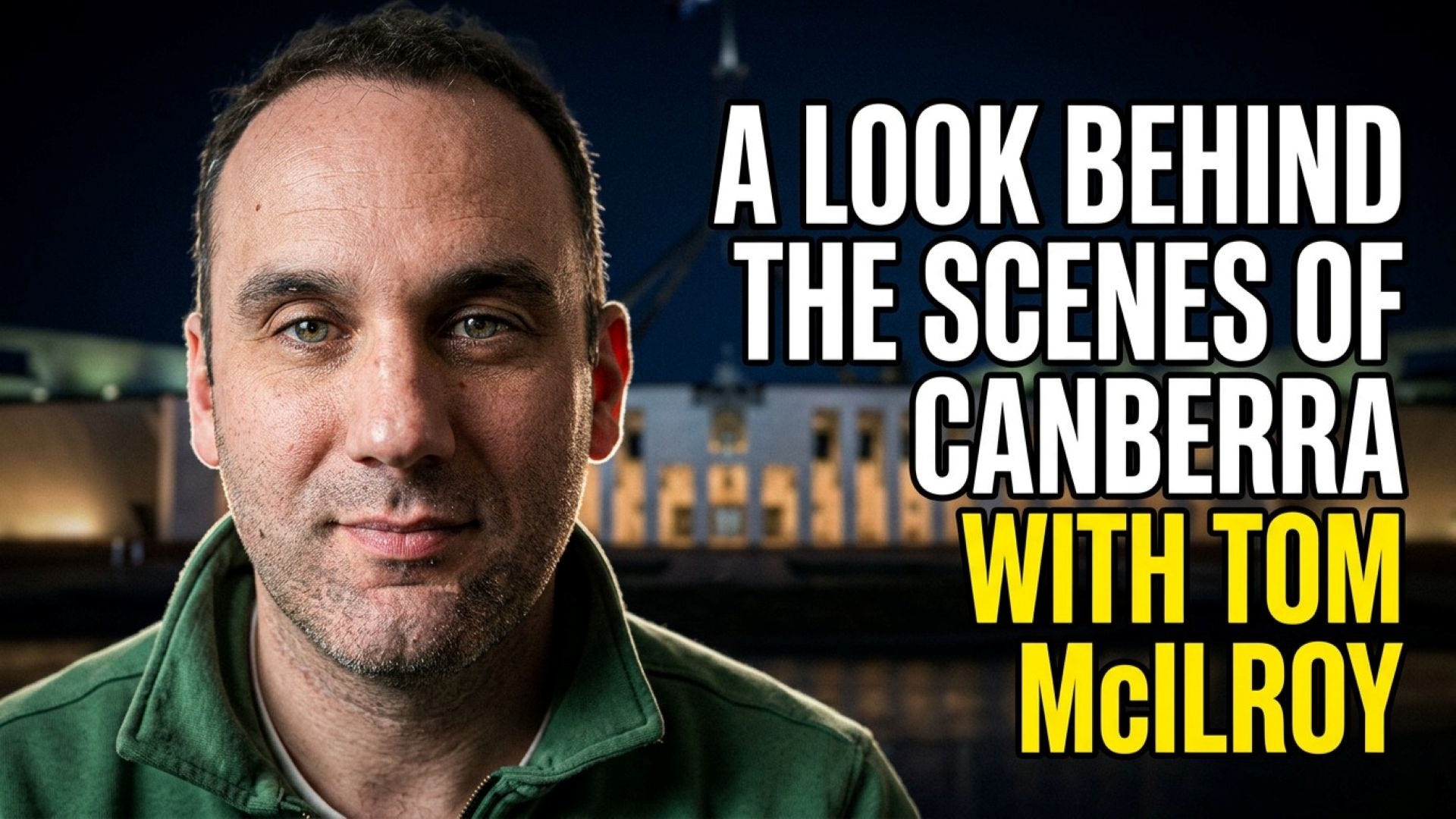
Political journalism should be judged by the scrutiny it brings to parties and their policies, rather than whether its coverage helps or hurts their electoral prospects, Guardian Australia political editor Tom McIlroy told Australia Asks. Asked whether repeated coverage was fuelling One Nation’s popularity, he acknowledged that attention could reinforce political narratives.
But growing voter interest also made scrutiny necessary, he argued, including examination of the party’s policies and leading figures. He said some recent coverage had been uncomfortable for Pauline Hanson, whom he considered resistant to criticism, and that journalists should help voters understand what lay beneath the party’s public presentation.
The difficulty of challenging politicians was another recurring concern. McIlroy disputed the suggestion that journalists generally allowed outlandish claims to pass unchallenged, but acknowledged limits imposed by press conferences where reporters might receive only one question.
He suggested journalists could work together more effectively, following up one another’s questions rather than allowing a politician to move on after an inadequate answer. Election campaigns offered particular opportunities for that approach. Restrictions on follow-up questions frustrated reporters as well as audiences, he said, while challenging unsupported statements remained an essential responsibility.
Explaining how government and economic policy worked was equally important to him. Asked how the Guardian helped readers understand political systems and competing proposals, McIlroy highlighted explanatory reporting, contextual passages within news stories and longer features. Journalists immersed in parliamentary processes could easily forget that readers had other demands on their attention.
Good reporting therefore needed to explain the rules, traditions and reasons behind an event, rather than assume familiarity. He said explainers resonated with readers because they brought the essential background together, helping both newcomers to a subject and people seeking a refresher.
Access to complete press conferences illustrated the practical limits of political transparency. McIlroy said many government appearances at Parliament House were available through its website, particularly those held in the Blue Room or the prime minister’s courtyard. Opposition and independent MPs’ appearances were less consistently broadcast through the same channels.
He suggested their social media accounts could provide fuller recordings, although some offices published only excerpts. With potentially dozens of press conferences on a sitting day, he acknowledged that voters could struggle to see every exchange in full.
Asked what might surprise people about Canberra, McIlroy identified lobbying and political donations as areas deserving much more attention. He described gaps between the federal lobbyist register and the people actually seeking to influence decisions, including business employees working in government relations.
He also criticised the lack of a transparent connection between the register and passes allowing access to private parliamentary areas. McIlroy welcomed moves towards tighter access rules and credited independent senator David Pocock and others with pressing the issue. Greater visibility of private influence, he argued, would benefit the political system.
On the influence of media owners and corporate interests, however, McIlroy’s experience differed from some readers’ assumptions. Obtaining reliable information about powerful politicians or businesses could be difficult, he said, but direct pressure from employers to pursue a particular political line had been very uncommon in his career.
Different organisations naturally devoted more attention to certain issues, yet he cautioned against assuming that proprietors routinely dictated coverage or editors constantly instructed reporters to advance vested interests. His answer reflected his own working experience rather than a claim that every newsroom operated identically.
A question combining trust in published information with the effectiveness of the opposition drew an answer focused on the Coalition’s political difficulties. McIlroy said individual shadow ministers and MPs were undertaking legitimate scrutiny, but the wider party remained weakened by its 2025 election result and poor polling.
He expected leadership speculation and internal indiscipline to continue while those pressures persisted. A formal arrangement with One Nation appeared unlikely to him, given the differences between an established coalition and an insurgent party. He nevertheless left open the possibility of a deal if a future election made it a route to government, stressing that this was speculation.
Asked how the Liberals had reached that position, McIlroy pointed to a broader identity crisis and a perceived mismatch with voters on climate change and social questions. He referred to political journalist Paul Kelly’s analysis of the Abbott, Turnbull and Morrison years as another account of that problem.
Moving further right could distance the Coalition from the centre, where McIlroy believed most voters sat, while One Nation’s gains intensified internal pressure. He said Labor could benefit from those divisions, although rebuilding support remained a challenge extending beyond any single leader.
The Greens faced a different problem: attracting attention in a debate dominated by the larger parties and One Nation. McIlroy said the Guardian covered the party extensively because its readers were interested and its parliamentary position made it important. In particular, its role in Senate negotiations required reporters to understand its policy decisions and compromises.
He acknowledged that the Greens could struggle to secure prominence, while noting their ambition to recover lower-house seats lost in 2025. Their legislative influence and electoral prospects, he argued, justified sustained coverage even when other parties dominated the headlines.
Cannabis legalisation demonstrated how an issue could attract public support without becoming a major federal priority. McIlroy said most of the activity he observed was occurring at state and territory level, while the major federal parties appeared wary of a politically difficult subject.
Medicinal cannabis and its commercial development received some attention, and he considered that discussion had advanced over recent years. He understood reform supporters’ frustration, but did not predict an imminent federal breakthrough or identify a specific proposal to raise revenue through legalisation.
Professional role models offered an insight into how McIlroy approached his own reporting. He named Kirsten Lawson, whom he worked with at the Canberra Times, and Phil Coorey, a colleague at the Australian Financial Review, as generous teachers of the fundamentals: recognising stories, developing them and finding the right people to interview.
He also praised Michelle Grattan’s reporting and continuing contribution to political journalism. His parents had shaped his interests too, with his mother’s work teaching history and English and his father’s background in public administration helping foster his interest in politics, news and storytelling.
Asked about favourite musicians, McIlroy resisted choosing a single act. His listening ranged from the Beatles to Kylie Minogue, with a fondness for older music alongside discoveries made through the radio and online. He described hearing something he liked and then downloading it, rather than presenting himself as a dedicated follower of one artist. Music, he admitted, was not necessarily his strongest subject.
Choosing a favourite song proved even harder. McIlroy tentatively nominated the Beatles’ Hey Jude, suggesting an older Beatles recording was probably among the songs he had heard most often. His answer was deliberately provisional, reflecting the difficulty of reducing a lifetime of listening to one selection.
For film, his professional interests produced a clearer choice. McIlroy singled out All the President’s Men, the Watergate journalism drama, as a favourite he had returned to repeatedly and regarded as perhaps the best journalism film made. He also expressed affection for Jurassic Park, describing it as a classic.
Television brought a longer list. McIlroy named Seinfeld and The West Wing among his favourites, with the latter appealing to his enthusiasm for politics. He also enjoyed Succession, older sitcoms including Frasier and Friends, and some reality television. Rather than settling on a single programme, he described tastes that combined political drama, comedy and lighter entertainment.
Asked for a favourite Canberra restaurant, McIlroy chose three. Italian and Sons in Braddon earned praise for consistently strong Italian food, while Raku appealed for its Japanese menu, service and bar. His third choice was Bar Rochford on London Circuit, which he valued for its atmosphere, music, wine and food. The selections offered a more relaxed view of Canberra from a journalist whose working life is usually concerned with what happens inside Parliament House.
You can see the full interview with Tom McIlroy on the Pub Politics Video Podcast at:
The questions were sourced from the general public through an online Q&A on the Australian community of Reddit (AMA): https://www.reddit.com/r/australian/comments/1v1a51s/ama_im_tom_mcilroy_guardian_australias_political/