

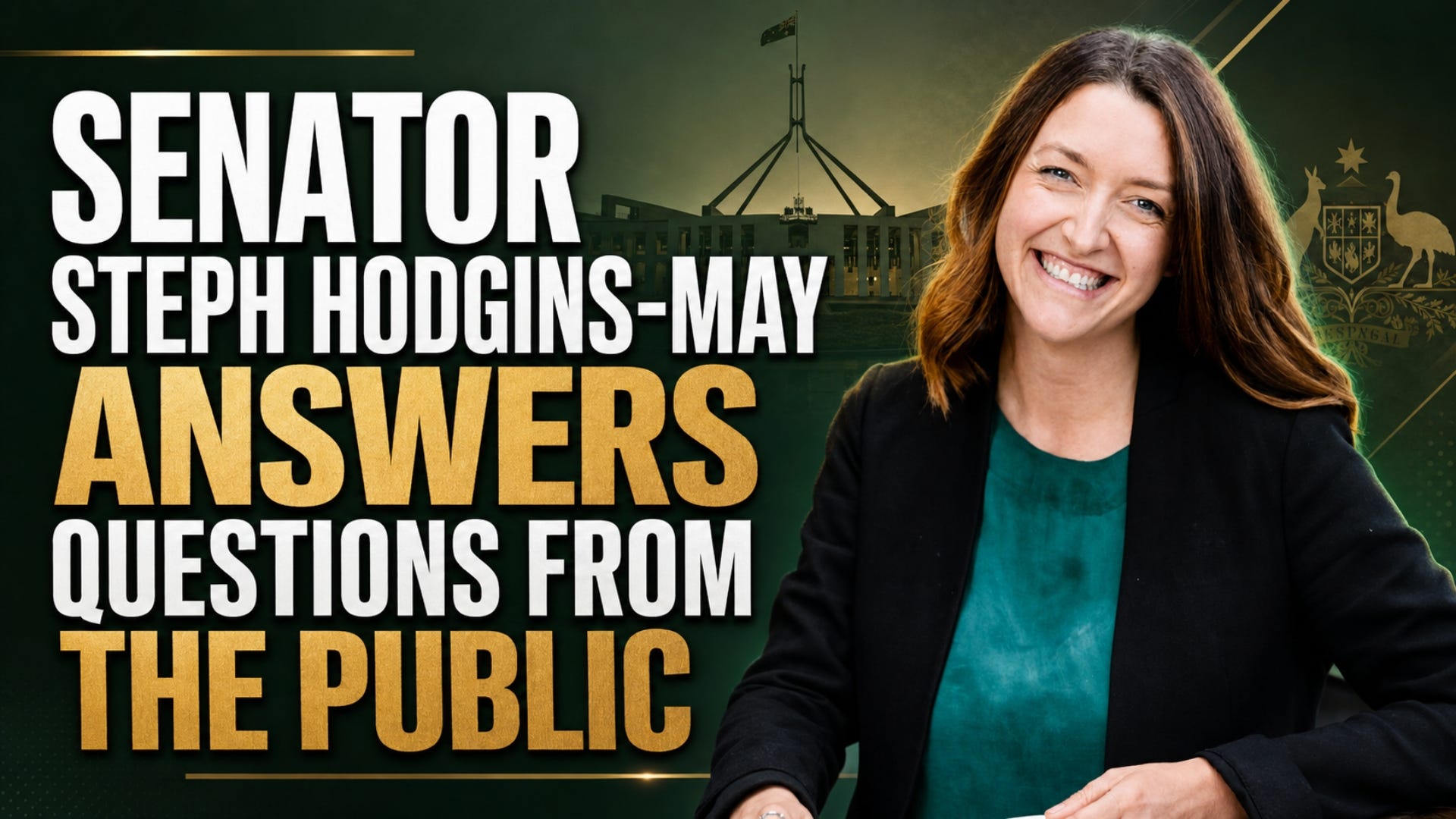
Universal early childhood education requires a shift towards public and community provision, rather than further adjustments to a market-based system, Victorian Greens senator Steph Hodgins-May argued during a Reddit Ask Me Anything discussion. Asked whether the party would prioritise public childcare over resource taxation, she rejected the choice between them.
A stronger contribution from multinational gas exporters could help fund universal services, she said. Hodgins-May wanted early education treated like primary and secondary schooling: planned, properly funded and accessible to everyone, with public benefit taking precedence over private profit.
A separate question about grants for council-run childcare centres prompted a more detailed explanation of that funding approach. Hodgins-May praised council, community and not-for-profit providers and welcomed the priority given to public and not-for-profit centres through the government’s Building Early Education Fund.
However, she argued that grants alone would not resolve the underlying problems. The Greens wanted to replace the childcare subsidy model with direct funding of provision, allowing local centres to be planned and adequately resourced rather than continually competing for grants to survive.
Asked how fossil fuel companies were involved in early education, Hodgins-May pointed to a report describing marketing through trusted institutions. She cited sponsored sunhats and drink bottles, alongside company-produced lesson plans that she said presented fossil fuel businesses as helping solve climate change.
She called for an immediate inquiry and argued that those companies had no place in schools. The issue connected two of the priorities she identified at the start of the AMA: early childhood education and the influence of fossil fuel interests.
Her support for taxing gas exports drew a challenge from a reader who noted that the Greens also campaigned to end fossil fuel use. Hodgins-May said the party remained committed to no new coal and gas projects and a rapid, fair transition.
Existing major gas operations could not be switched off overnight, she argued, so the public should collect revenue while exports continued. She wanted that money used to accelerate renewable energy and electrification, presenting taxation of existing exports as compatible with moving away from fossil fuels.
Public-service funding also featured in her answer on cannabis legalisation. Hodgins-May confirmed that legalisation remained Greens policy and argued that revenue from a regulated market, together with stronger gas taxation, could support services such as the NDIS.
She rejected the suggestion that legal cannabis was a radical proposition, comparing adult use with having a beer. Acknowledging that the campaign sat outside her own portfolio, she suggested her colleague Senator David Shoebridge could provide a fuller update on its progress.
A second cannabis question raised criticism attributed by a reader to former Brisbane Greens councillor Jonathan Sriranganathan. Hodgins-May initially said she could not identify the quote and reaffirmed the party’s longstanding support for legalisation and expanded hemp use.
In a later reply, she suggested the dispute might concern Legalise Cannabis support for NSW proposals involving police access to patients’ addresses and prescription details. She opposed that sharing of information, framing her position around privacy and resistance to police overreach rather than opposition to cannabis reform.
Asked whether the Greens would remove the partner income test from the Disability Support Pension or other welfare payments, Hodgins-May said removing it had long been party policy.
She credited Senator Jordon Steele-John with campaigning for the change. In her view, the test was discriminatory and further restricted disabled people’s options and opportunities. Her answer endorsed the principle of removal without setting out a timetable or the mechanics of implementation.
Proposed data centres prompted a call for a pause. Responding to concerns about a large development proposed for the Latrobe Valley, Hodgins-May said projects were being rushed and community objections overridden. She identified security, water consumption and electricity demand as central concerns.
The Greens wanted a moratorium until strict environmental and water standards, a plan for power use and a comprehensive artificial intelligence strategy were in place. Her response focused on infrastructure safeguards rather than the reader’s additional question about AI in education.
On the harms associated with social media and endless scrolling, Hodgins-May directed readers to Senator Sarah Hanson-Young’s work on the “Fix Our Feeds” bill. She said the proposal aimed to give users greater control, including options to opt out of algorithms and remove infinite scrolling.
A reader had suggested personalised usage warnings, but she did not explicitly endorse that particular design. Her answer instead emphasised changing the choices available to users within platforms.
Misinformation and disinformation were her answer to a question about the greatest threat to Australian democracy. Hodgins-May warned about material distributed through international bot farms and campaigns funded by opaque sources, arguing that it left voters less informed on issues including climate change.
Asked also about authoritarian tendencies in Victoria, she expressed concern and pointed to Greens calls for greater transparency and accountability in the state. She did not set out a detailed new regulatory proposal in that response.
More direct public participation was another part of her democratic agenda. Asked about citizens’ assemblies selected by lottery, Hodgins-May cited a Greens election proposal for a $10 million Public Interest Democracy Fund supporting citizen juries.
She also highlighted digital participation, stronger online petitions and easier pathways for community issues to be debated in parliament. She regarded randomly selected citizens’ assemblies as promising for complex, long-term questions, while clarifying that the party did not have a policy making them a routine feature of local government.
On the Greens’ electoral position, Hodgins-May rejected a reader’s description of the party as having been annihilated. She corrected the reference to a 2024 federal election, saying the relevant election was in 2025, and argued that the party had retained its Senate representation and national vote despite losing valued lower-house MPs.
She defended the role of protest alongside practical reform. To counter One Nation, she wanted the Greens to address living costs, housing and global uncertainty directly, while offering an alternative to policies she believed protected billionaires and large corporations.
Defence policy produced a sharp critique of AUKUS. Asked about the cost of defending Australia without allies, Hodgins-May focused on the risks she believed flowed from closer integration with the US military. She argued that nuclear-powered submarines and supporting bases involved enormous expense and could expose Australia to conflict rather than make it safer.
Her distinction was between forces designed to defend the country and those equipped to participate in distant wars. She did not provide an alternative defence-spending figure in response to the question.
For an unexpected glimpse of Senate life, Hodgins-May recalled finding herself in the chamber holding dead seahorses. The daily surprise, however, was more procedural: division bells could interrupt meetings and committee work, requiring senators to drop everything and hurry to vote.
She added that an hourglass helped mark the time available to reach the chamber and sometimes appeared slightly slower than the clock. It was an old-fashioned detail within a job otherwise dominated by contemporary policy disputes.
The questions were sourced from the general public through an online Q&A on the Australian community of Reddit (AMA): https://www.reddit.com/r/australian/comments/1uifrri/im_senator_steph_hodginsmay_senator_for_victoria/