

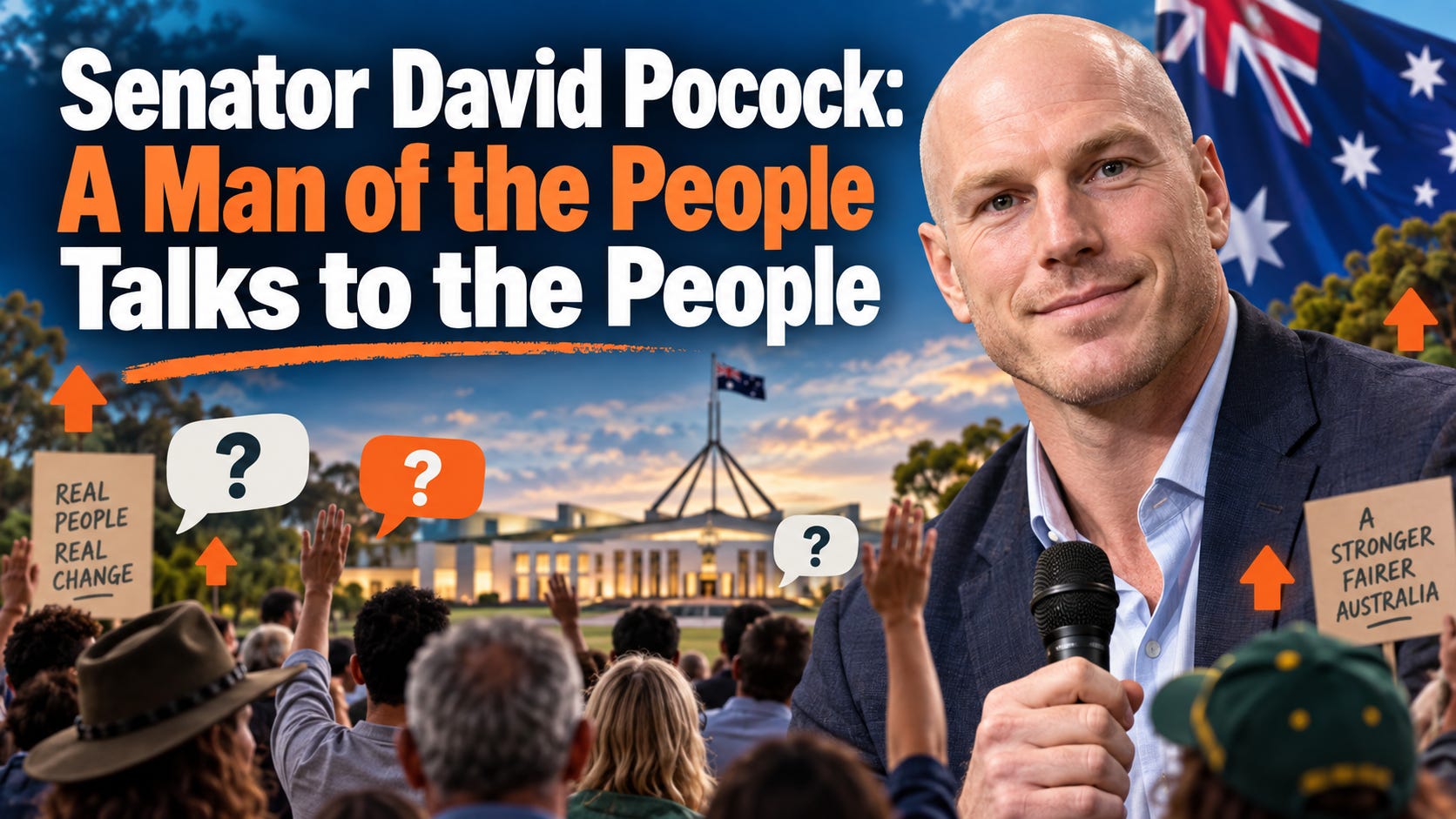
Independent ACT senator David Pocock named housing affordability as Australia’s most pressing political issue in a Reddit Ask Me Anything. He said short leases left renters with little stability and called for stronger protections, more public housing and national 10-year plans for housing and homelessness, and for population and migration.
He also warned that a rush to build data centres could draw construction workers away from home building.
Asked whether housing should be a basic human right, Pocock said it should and pointed to two bills he had introduced in the Senate. One would require a 10-year housing and homelessness plan. The other would reserve at least 30 per cent of housing on Commonwealth land sold for development for social and affordable homes.
He urged the government to build at least 100,000 public and key worker homes, citing the postwar building effort.
On Labor’s tax changes, Pocock welcomed reforms to negative gearing and the capital gains tax discount for investment properties. He said changes affecting other assets had come without adequate consultation and risked unintended consequences.
He hoped Parliament could improve the settings when the government brought forward its next round of tax legislation.
Asked what could be done for households squeezed by rising costs, Pocock said many people were working hard while wages failed to keep up with rent, groceries, fuel and childcare.
He argued that pressure was eroding trust in politics. He pointed to weak competition in some industries and said revenue from a gas export tax could support public services, reduce debt or go into a sovereign wealth fund.
On what level of migration Australia could sustain, Pocock said he did not have a figure in mind. He argued for examining skills shortages, housing, infrastructure and environmental impacts, with input from experts and affected communities. He said the major parties had voted down his attempts to establish a Senate inquiry into migration.
A separate question proposed an independent agency to set migration caps. Pocock focused on what a long-term public plan should account for, including housing supply, infrastructure, water, training and the effect of artificial intelligence on demand for workers. He left open who should set the cap.
Data centres and jobs
Asked about the Albanese government’s approach to data centres, Pocock said its expectations for operators were non-binding at the time of the AMA and that the national standards under discussion would apply only to new facilities. He said construction could deliver a short-term boost and wanted the government to explain how Australians would benefit once the facilities were operating.
On the risk of offshoring and AI-related job losses, Pocock said Parliament was giving too little attention to how the two trends could compound each other. He cited Singapore’s support for retraining and said Australia could also learn from Nordic employment programs.
He argued that companies using Australian energy, water and labour to build the AI economy should deliver lasting benefits here.
Another reader asked what Australia could do about companies moving jobs overseas. Pocock said he had heard from workers affected by offshoring and argued that Australia should secure a fair return from multinational investment.
He pointed to digital services taxes in France and the United Kingdom as examples of ways to raise revenue from multinationals.
Resource revenue and political influence
Asked who else supported taxing the resources sector more heavily, Pocock said support for a fairer return extended to several lower house independents and senators Jacqui Lambie and Lidia Thorpe, and to some extent One Nation.
Pocock has advocated a 25 per cent gas export tax and said resource revenue could help reduce debt and prepare Australia for challenges including climate change and AI.
On political donations, Pocock said candidates and incumbents needed enough resources to communicate with voters, alongside rules to prevent cash-for-access arrangements.
He singled out donations from the gambling and gas industries as a concern and called for a rethink of electoral funding changes that he said would make it harder for independents to compete.
Asked separately about banning lobbying and political donations, Pocock said advocacy groups had a legitimate role and argued for a lobbying code that covered in-house as well as external lobbyists.
He also called for longer cooling-off periods for people leaving government and for ministers to publish their diaries. He said a blanket ban on donations could raise constitutional issues.
Responding to a reader who lamented that the recommendations of Peta Murphy’s gambling inquiry had yet to be implemented, Pocock renewed his call for a full ban on gambling advertising.
He said the government’s own modelling showed a full ban would be cheaper to enforce and more beneficial to the public than the partial ban it had put forward.
Asked how government could better serve communities, Pocock said electing more community independents could bring local priorities into negotiations. He pointed to Nordic countries as examples of minority governments that could work and suggested that arrangements requiring parties to negotiate might encourage longer-term thinking.
On criticism from Friendlyjordies, Pocock said he judged bills on their merits after consulting experts and ACT residents. He said he supported the government where he agreed with it and challenged it on issues such as gas taxation and gambling reform.
He welcomed constructive feedback and said he expected criticism of independents to grow before the next election.
Territory rights and life in the Senate
Asked whether other jurisdictions could learn from the ACT’s cannabis reforms, Pocock said he considered them largely successful and would oppose Commonwealth interference in the territory’s decisions.
He cited earlier federal restrictions on voluntary assisted dying as an example of why territory rights mattered. He supported broadening the ACT’s revenue base and stopped short of endorsing the reader’s suggestion of taxing cannabis.
One reader asked whether the Senate seats were comfortable. Pocock said they were and described some of Parliament House’s furniture as “simple and beautiful”. When counting votes during a division, he said, he often found himself admiring the curved timber bin beside the Clerk’s desk.
The questions were sourced from the general public through an online Q&A on the Australian community of Reddit (AMA): https://www.reddit.com/r/australian/comments/1vyjbu9/ama_im_david_pocock_senator_for_the_act_ask_me/