

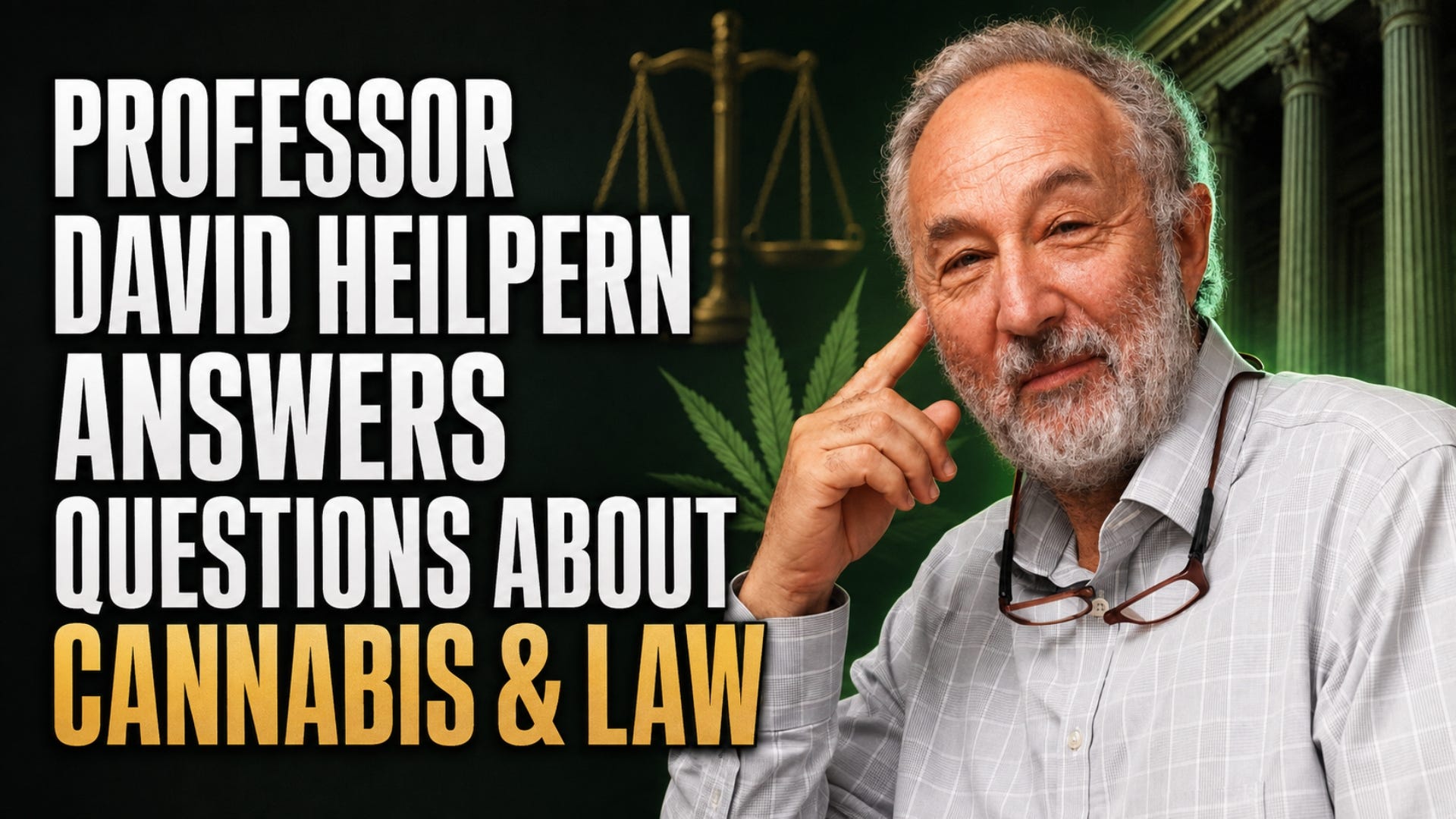
Prescription cannabis should be treated like other prescribed medicines under Australia’s driving laws, Professor David Heilpern argued during a Reddit Ask Me Anything discussion. The Southern Cross University law dean and former NSW magistrate said his campaign sought to remove penalties based solely on the presence of prescribed THC while retaining offences for driving impaired.
Asked why cannabis was treated differently from opioids and other psychoactive medicines, he blamed its history of prohibition and continuing stigma. Heilpern, who said drug-driving laws contributed to his decision to leave the bench after 22 years, helped establish the reform organisation Drive Change.
Asked about someone who used cannabis in the morning and drove later after feeling sober, Heilpern said driving without impairment should be lawful, but distinguished that position from the law as he described it during the AMA.
Detectable THC could still expose drivers to prosecution even after noticeable effects had passed, he said. A driver’s personal belief that they were sober was not a sufficient test either: he wanted an objective assessment and proof of an offence. He pointed to Tasmania’s medicinal defence as a model he wanted adopted more widely.
Questions about inconsistent product strength, possible contamination and the difficulty of setting a THC limit brought him back to equal treatment. Heilpern argued that uncertainty about individual responses also existed with other prescription medicines, yet those medicines were not subject to the same presence-based testing regime.
He acknowledged that impairment varied between people and that even an alcohol limit was only an approximation of its effects. His preferred starting point was fairness between prescribed drugs, with penalties directed at adverse effects on driving rather than special prohibitions for THC.
On the evidence linking medicinal cannabis to crashes, Heilpern said he knew of no Australian coronial finding establishing that prescribed medicinal cannabis had caused a road death. He challenged the use of post-mortem THC detections as proof of causation, arguing that traces could indicate earlier use rather than impairment at the time of a collision.
He also cited Tasmania’s road-toll experience in support of reform and directed readers towards clinical research at the University of Sydney. He maintained that driving while adversely affected should remain an offence, and described research as being ignored rather than suppressed.
Asked about the possible economic and social effects of the Queensland changes under discussion, Heilpern predicted serious consequences but acknowledged uncertainty about their scale. He raised the example of patients crossing from northern NSW into Queensland for hospital care, as well as holidaymakers facing different rules across borders. Some patients might continue risking prosecution, abandon treatment or return to other medicines, he suggested.
In a related reply about fatigue and distraction, he argued that discouraging cannabis treatment could push people towards medicines he considered more impairing, or leave them driving tired and in pain. He also raised the prospect of additional pressure on courts and tourism.
Queenslanders did not need to wait for an election to campaign, he told a reader seeking practical avenues for opposition. Heilpern encouraged pressure on professional and membership organisations, including the legal profession, RACQ and the Australian Medical Association in Queensland.
He criticised the positions of the latter two organisations and said judicial officers he had spoken with wanted change. He also cited Police Association support for the NSW proposals, presenting that as evidence that reform could attract backing beyond cannabis advocacy groups.
In response to a question about the influence of prohibitionist lobbying, Heilpern described progress as frustratingly slow but said most jurisdictions appeared to be moving towards reform, with Queensland the exception in his assessment. He said the NSW campaign had assembled parliamentary support across political divisions and backing from the Police Association.
At the time of the discussion, he hoped the proposed changes would pass before the end of the year. He suggested that the effects of inconsistent laws on tourism and border communities could become another source of pressure for change.
The discussion also extended to a legal recreational cannabis market. Asked how supporters could secure greater political backing, Heilpern urged voters to support parties that committed to reform.
He argued that resistance should be understood by examining who benefited from existing arrangements, identifying alcohol interests, pharmaceutical lobbying and law enforcement, alongside supportive sections of the media. He expressed particular disappointment at the lack of progress in Western Australia despite Labor’s large parliamentary majority.
On police drone surveillance, Heilpern distinguished legal authority from the value of an operation. If drones were being used to detect cannabis crops, he considered that a poor use of resources and argued that police should prioritise offences involving victims.
He also rejected reliance on police investigating their own conduct, calling instead for independent oversight. The principle extended beyond policing, he said: professions should not be left to investigate themselves where that created opportunities for abuses of power.
A question contrasting a police officer’s non-custodial manslaughter sentence with the detention of young people for joyriding prompted a sharp criticism of sentencing outcomes. “Law and justice are distant relatives,” Heilpern replied. Referring to the officer’s use of a Taser, he argued that the absence of a guilty plea should, in his view, have ruled out a non-custodial sentence.
He also acknowledged that joyriding could cause deaths, while making a self-deprecating admission about his own youthful behaviour. His response expressed a personal judgement about the outcome rather than identifying a legal prohibition on that sentence.
Asked how often people successfully represented themselves, Heilpern said he had seen many do well in minor drug-driving matters, where access to legal assistance could be limited. He recalled co-writing a guide to representing oneself in the Local Court.
For serious proceedings, however, he strongly favoured professional representation, comparing the risks of handling one’s own case with attempting one’s own surgery. Cost remained the central difficulty, he said, because many defendants represented themselves through financial necessity rather than preference.
For readers preparing for a court appearance, he highlighted publicly available state-based legal information, pointing to NSW resources and Legal Aid Queensland’s website. He said his experience included both excellent self-representation and poor professional advocacy.
Asked which question he wished someone would pose, Heilpern nominated how he sustained a campaign he had expected to last months but which had continued for years. He also drew attention to what he described as Australia’s exceptional scale of random roadside THC testing, claiming it exceeded the rest of the world combined.
Heilpern supported stronger formal protection for free speech when asked whether Australia needed a bill of rights. He acknowledged the High Court’s recognition of an implied freedom of political communication, but argued that protections developed through judicial decisions could be difficult to define and predict.
He regarded the rights frameworks in Queensland and Victoria as worthwhile, while favouring a constitutionally entrenched bill of rights as a clearer and more effective safeguard.
The appeal of studying law provided a more personal perspective. Responding to someone considering enrolment in their late twenties, Heilpern offered enthusiastic encouragement, describing legal study as an exploration of moral, philosophical and ethical dilemmas.
He illustrated that appeal through the English case of Blaue, involving a stabbing victim’s refusal of a blood transfusion and a dispute about responsibility for her death.
In the same reply, he rejected a suggestion that he supported Pauline Hanson’s One Nation, while expressing interest in Hanson’s position on driving with detectable THC. His enthusiasm for legal education remained undimmed by his criticisms of the justice system.
The questions were sourced from the general public through an online Q&A on the Australian community of Reddit (AMA): https://www.reddit.com/r/australian/comments/1v9jxck/ama_im_professor_david_heilpern_dean_of_law_at/?sort=old