

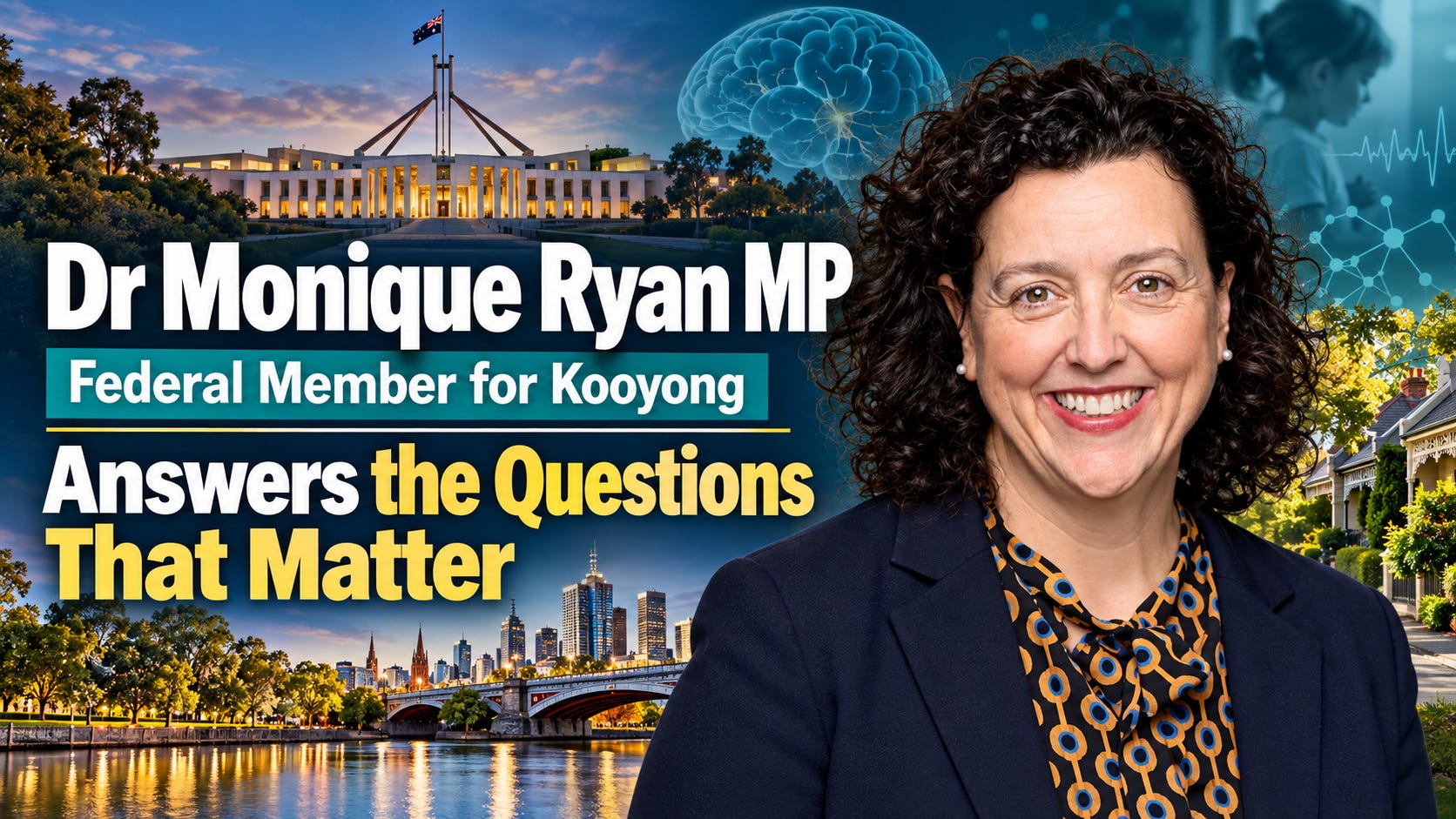
Independent federal MP for Kooyong Monique Ryan called One Nation “the wrong answer to the right question” in a Reddit Ask Me Anything, arguing that voters’ concerns about housing, living costs and trust in government were real.
Asked what she would say to voters who felt politically homeless, Ryan pointed to the crossbench’s work on climate policy and the national anti-corruption commission. She said community candidates could give voters a stronger voice in Canberra and argued that blaming migrants would do little to address the pressures driving their frustration.
A separate reader asked why One Nation was attracting voters who might otherwise turn to the Greens or the teals. Ryan said frustration with politics could lead voters to see even independents and smaller parties as part of the establishment. She challenged Pauline Hanson to spell out how One Nation would improve the economy, health care and aged care.
A former Liberal voter asked what community independents were doing for people who valued renewable energy and Medicare. Ryan pointed to faster emissions cuts and a shift to cheaper, cleaner power.
She said she planned to reintroduce a private member’s bill to open ministerial diaries to scrutiny and curb lobbyists’ influence. She also highlighted her work on an inquiry into access to specialist care and her support for expanding dental coverage for children and retirees.
Asked whether the community independent movement could keep growing as One Nation gained support, Ryan pointed to Victorian state election campaigns by Sophie Torney in Kew and Shima Ibuki in Hawthorn.
She said the campaigns showed voters had options outside the major parties and that community independents could make elected representatives more accountable to their electorates.
On why she stayed independent after Zali Steggall and Allegra Spender formed Community Strong Australia, Ryan said she wanted to keep representing Kooyong in the capacity in which voters had elected her in 2022 and 2025. She said she understood her colleagues’ decision and would continue working with them.
When another reader urged Ryan and independent senator David Pocock to form a party, she pointed to their existing work with other crossbenchers to improve legislation across both houses of Parliament.
Asked about working with Labor and One Nation colleagues, Ryan said committee work and parliamentary friendship groups had helped build productive relationships across party lines.
She said she got on with fellow crossbench MPs Barnaby Joyce and David Farley despite political differences, recalling a trip to Washington with Joyce to advocate for Julian Assange’s release.
For Victoria’s state election, Ryan named integrity, living costs and the state’s finances as priorities. She welcomed stronger powers for the state’s anti-corruption commission, criticised plans to step back from transmission commitments for renewable energy and called for greater transparency about public spending as state debt grows.
Tax reform and the economy
Asked how large companies could be made to pay a fairer share of tax, Ryan called for stronger enforcement powers for the Australian Taxation Office and more action on multinational tax avoidance.
She backed replacing the Petroleum Resource Rent Tax with a levy on gas revenue, winding back fuel tax credits for large mining companies and rebalancing the tax burden between wages and other income.
On capital gains tax, Ryan supported addressing advantages for those who already own property but criticised the government for announcing changes affecting shares, start-up equity and venture capital on budget night.
She said the government had adopted a higher revenue threshold for small business concessions after she raised it in the House, and that she would keep pressing for changes where the new settings were hurting businesses.
Asked about shifting from stamp duty to an annual land tax, Ryan said the states should work with the federal government on reform. She said the prospect of paying stamp duty discouraged some older people from downsizing and acknowledged that an annual tax would raise questions about how to design the transition.
Migration, Productivity and Education
On migration, Ryan backed a transparent and sustainable program that met economic needs alongside planning for housing, infrastructure and services. She said many industries would continue relying on migration until Australia improved its education and vocational training systems.
In response to a separate question about productivity, Ryan called for investment in education and skills, medical research, science and technology, a modern energy system and better access to health care. She also argued for tax reform that tackled housing affordability and inequality between generations while giving older Australians certainty about their finances.
Asked how Australia could support early-stage researchers and turn more discoveries into commercial ventures, Ryan called for reform across the research funding system. She said the government should say when it would respond to and act on the recommendations of its review of research and development.
AI safety and online platforms
Asked about AI data breaches and big tech accountability, Ryan called for faster work on a national AI safety law, clearer breach disclosure requirements and more funding for the AI Safety Institute. Her reply focused on the handling of sensitive information, leaving the reader’s questions about data centre expansion and Australia’s international role open.
On proposed digital duty-of-care laws, Ryan welcomed the move and said users should have to opt in to algorithmically recommended content.
She warned platforms could comply in ways that frustrated the intent of the rules and said addressing online misinformation and misleading political advertising was important, even though such measures would be hard to legislate and enforce.
Asked whether MPs should use government email accounts for constituent correspondence, Ryan called for stronger oversight of parliamentary technology services. She also said the rules governing MPs’ use of AI were due for review.
Health and care services
Asked whether Medicare’s bulk-billing incentives were improving care for people who need longer GP visits, Ryan credited them with lifting bulk-billing rates.
She said rebates still favoured shorter consultations, disadvantaging patients with complex needs and women GPs who often provide that care. She backed a mix of payment models that rewards doctors for keeping people well.
On the National Disability Insurance Scheme, Ryan acknowledged weaknesses in its design and administration that left it open to waste, fraud and inappropriate claims by some providers.
She said most participants used the scheme as intended and argued that recent legislation cut services without doing enough to tackle abuse. She said she would continue advocating for people at risk of losing support.
Asked what should change after the recent aged care reforms, Ryan said people needed clearer information about eligibility, waiting times, co-payments and appeals. She said the crossbench had secured an acknowledgement that assessors had been unable to override incorrect decisions made by an algorithm, and that this would change.
A separate question raised older patients staying in hospital while waiting for an aged care place. Ryan said the delays were putting significant pressure on public hospitals, backed looking at step-down facilities for people awaiting placement and said she would raise the issue again with the health and aged care ministers.
Asked why public hospital doctors were still waiting for a new enterprise agreement, Ryan said negotiations were a state responsibility and that she had heard concerns from former colleagues. She invited the reader to contact her office and offered to make inquiries.
Defence and firearms
Asked whether the United States and United Kingdom could deliver the submarines promised under AUKUS, Ryan renewed her call for an independent Australian review. She questioned whether either country could meet Australia’s needs while building enough submarines for its own fleet.
She said a review should identify delivery timelines, the points at which Australia might reconsider its commitment and alternatives if the agreement faltered.
Asked about firearms measures after the Bondi attack, Ryan said she supported a national firearms register, stronger background checks and a national buyback for some firearms.
She argued those measures would improve traceability, oversight and public safety. Her answer focused on the federal response, leaving the question about caps for recreational and target shooters open.
On pineapple on pizza, Ryan said her family was happy with any pizza. Her own verdict was that pineapple “should be illegal”.
The questions were sourced from the general public through an online Q&A on the Australian community of Reddit (AMA): https://www.reddit.com/r/australian/comments/1ws55fs/ama_im_monique_ryan_mp_independent_for_kooyong/